LAC-EU's Second Network Event: Three Days of Exchange at FLACSO Argentina
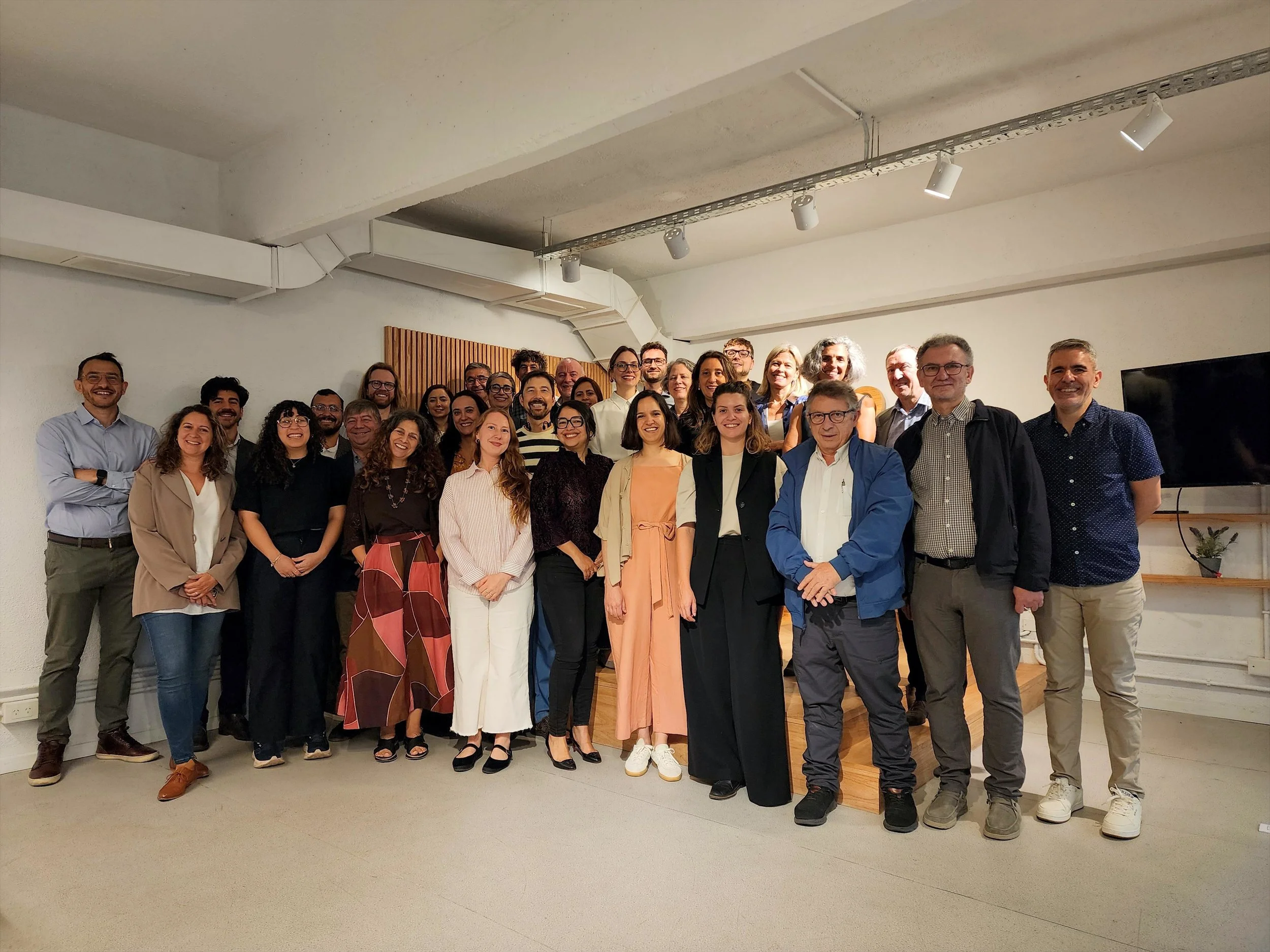
From 18 to 20 March 2026, the LAC-EU doctoral network gathered at FLACSO Argentina in Buenos Aires for its second network-wide event. During three intense days, doctoral candidates, senior researchers, and invited experts from both sides of the Atlantic engaged in academic exchange, training, and dialogue.
Holding this network meeting in Buenos Aires was not incidental. LAC-EU is built on the conviction that understanding Latin American challenges in the 21st century requires genuine engagement with Latin American institutions, perspectives, and scholarly traditions. Gathering at one of the region's most prestigious social science institutions embodied that commitment.
The LAC-EU Network
The programme opened on Wednesday 18 March with a series of roundtables and panels that brought the network's research agenda into dialogue with fellows and broader audiences alike. The first session addressed Regulatory Governance in EU-LAC Relations, with Jacint Jordana (IBEI), Jan Wouters (KU Leuven), and Valentina Delich (FLACSO Argentina), moderated by Gustavo Müller (KU Leuven). This was followed by a panel on ¿Entre autonomía estratégica y vasallaje? Repensando la relación UE–ALC en la geopolítica contemporánea, with Benedicte Bull (University of Oslo), Diana Tussie (FLACSO Argentina), and José Antonio Sanahuja (Universidad Complutense de Madrid), moderated by LAC-EU doctoral candidate Domonkos Bánki (FLACSO Argentina). The day's programme closed with a public roundtable on Current Challenges in Migration Governance: The Role of the Local Level, featuring Harald Bauder (Toronto Metropolitan University), Mercedes Botto (FLACSO Argentina), and Juan Carlos Triviño Salazar (Universitat Pompeu Fabra), moderated by LAC-EU doctoral candidate Alice Blukacz (FLACSO Argentina).
Thursday 19 March was dedicated to doctoral training, with workshops on PhD research presentations, scientific integrity and open access, and methodological approaches. The day closed with a public roundtable, De las calles a la literatura y el cine: Derechos sexuales, punición y movilizaciones en América Latina, centred on the film Belén, the feminist movement, and the struggles for the legalisation of abortion in Argentina. The session featured lawyer Ana Correa (author of Somos Belén, the book on which the film is based), Eleonor Faur (Universidad Nacional de San Martín / IDES), and Isabel González Puente (Student Union, Filosofía y Letras / UBA), moderated by LAC-EU coordinator Andrea C. Bianculli (IBEI). The discussion offered a compelling account of the challenges faced by the Argentine feminist movement over the last decade, its hard-won conquests, and its recent setbacks. It was also a reminder of the power of storytelling to shape public opinion and influence policy.
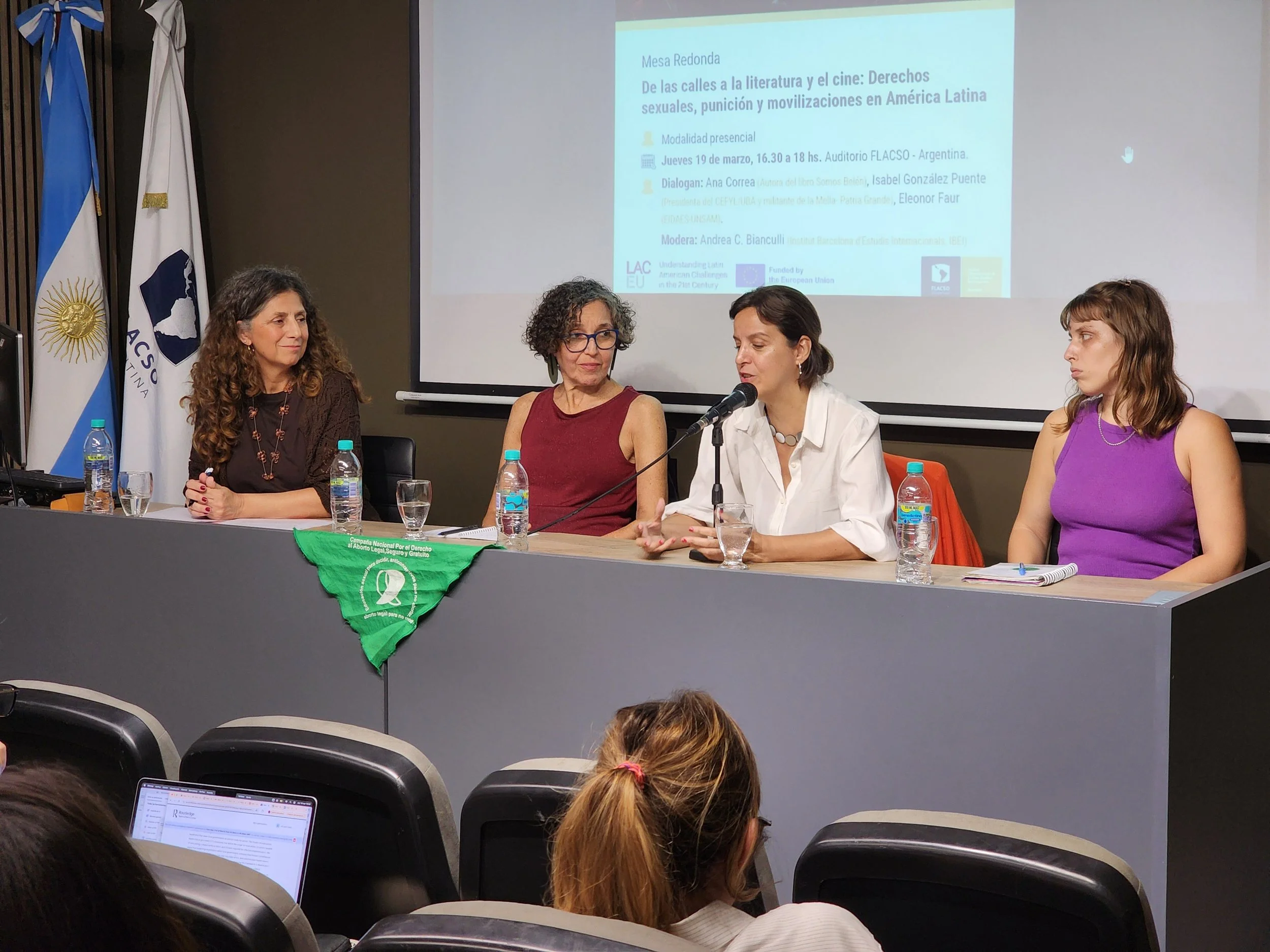
Public roundtable De las calles a la literatura y el cine: Derechos sexuales, punición y movilizaciones en América Latina. From left to right: Andrea Bianculli, Eleonor Faur, Ana Correa, Isabel González Puente
Friday 20 March included an internal PhD meeting and an engaging workshop on AI applied to social science research, led by Valeria Odetti (FLACSO Argentina). The day concluded with a discussion led by by Andrea C. Bianculli and Jacint Jordana (IBEI) on the paper Conceptualising EU-LAC Relations: A Research Program, which sets out the shared research agenda for the network across its two main thematic areas: democracy, politics and human rights on one side, and trade, climate change and market risks on the other.
On Saturday, participants had the opportunity to visit the Museo Nacional de Bellas Artes, where a guided tour offered a journey through Argentine history as told through art. It was also an occasion to reflect on the long, entangled, and evolving relationship between Europe and Latin America, so vividly present in the country's artistic heritage.
We extend our warmest thanks to FLACSO Argentina for their hospitality and intellectual generosity throughout these three days. We are also deeply grateful to all the participants who engaged in our sessions and workshops, and to everyone who joined us for the public talks. We look forward to continuing to build this bi-regional network together.